Thursday, December 1, 2011

Educational Background of Rizal During the Studies in Ateneo de Manila, UST and Abroad


Rizal’s Educational Background.
IN ATENEO:
Four months after the martyrdom of GomBurZa, Jose Rizal’s parents decided to send him to a school in Manila. He passed the entrance examination in San Juan De Letran but during his stay for fiesta in their hometown, his father changed his decision and sent him to Ateneo instead. Ateneo Municipal was run by the Jesuits which was the rival of the Dominican priests. The Jesuits were great educators which attracted most of the prominent families to send their children to their school.
Rizal was eleven years old when he first studied there. He can understand Spanish but cannot speak the language fluently. He was placed at the bottom of the students rank, but in just a week’s time, Rizal showed excellence in all of his subjects. He learned the Spanish language incredibly fast and within one month, he was the schools emperor, meaning the top student.
Rizal’s first teacher was Father Bech. In the second half of the first year, his performance declined and was not able to maintain his academic supremacy that he held during his first half of the term for the reason that he was affected so much by the remarks of some professors. He placed second at the end of the year although his grades were marked excellent.
The second year, Jose had the same professor as in the previous year. At the end of the term, he visited his mother, who was still in prison, and told her the good news of his school performances. He was more inspired when he came back to school after his visit with his mother because he was told that she will be released three months from then.
In his fourth year, he befriended his professor father Sanchez, who became his favourite teacher. Father Sanchez inspired Rizal in poetry and to study harder. He showed appreciation to Jose’s God-given wisdom. For this reason, Jose Rizal regarded the Jesuits as “model of uprightness, earnestness, and love” for the advancement of the students.
At the age of 16, he graduated in Ateneo and received a bachelor in arts with highest honor but not as the valedictorian.
IN UST:
                The Bachelor of arts degree during Spanish times was equivalent to a high school diploma today. Thus Rizal’s brother, Paciano , and his mentors in Ateneo urged him to pursue higher education which his mother strongly disagreed. Donya Teodoro was afraid of what would happen to his son if he gained more knowledge, for she knew the fate of the Filipino intellectuals during their time.
                Regardless of his mothers warning, Rizal pursued higher education in UST. He enrolled in philosophy and letters because his father liked it. Rizal was still uncertain about his career and seeks the advice of others. Not long enough, Rizal received a letter from Father Recto whom he consulted for advice which course to take. He then shifted to Medicine, not only because of Father Recto but more importantly because of his mother who was losing her sight in those days.
                During his study in UST, Jose was also enrolled in Ateneo, he took a vocational course leading to a title of expert surveyor. Rizal remained his loyalty in Ateneo and participated in the schools activities. He loved the Jesuits more than the Dominicans who run his present school. The Dominicans showed racial discrimination for Filipinos and Rizal doesn’t like to be treated that way.
                Rizal joined contests in UST and showed his excellence in writing poems. He won first prize in two different major contests.  His works were the “To the Filipino Youth” and “The Council of the Gods”. His winning piece showed the Dominican priests that an indio could equal the Spaniards, or even better than them.
IN SPAIN:
                After finishing his medicine course in UST, Jose decided to go abroad to widen his knowledge about ophthalmology. Knowing his mother would disagree for his departure, Jose left the country in secret. Only his brother Paciano and his sister Saturnina knew of his plans. Jose Rizal first came to Barcelona, and then later on moved in Madrid, for education was cheaper in Madrid. He enrolled at the Central University in Madrid for licentiate in Medicine. He also took up lessons in painting and sculpture in Academia de Bellas Artes de San Fernando and in his free time he studied French and German language in Ateneo de Madrid.
            The next academic year, he studied and passed all subjects leading to the degree of Doctor of Medicine. However, he did not submit the thesis required for graduation nor paid the corresponding fees. He was not awarded his Doctor’s Diploma. Jose Rizal also finished his studies in Philosophy and Letters with higher grades. He was awarded the Degree of Licentiate in Philosophy and Letters by the Universidad Central de Madrid with the rating of excellent.
                In November, Rizal moved to Berlin where he stayed four months and worked as the assistant of the leading ophthalmologist, Dr. Louise de Weckert. He easily learned the medical techniques of eye operation during his stay with the doctor.

Sunday, November 27, 2011

Educational Background of Rizal During Childhood


The Hero’s First Teacher
            The first teacher of Rizal was his mother, who was a remarkable woman of good character and fine culture. On her lap, he learned at the age of three the alphabet and the prayers. "My mother," wrote Rizal in his student memoirs, "taught me how to read and to say haltingly the humble prayers which I raised fervently to God."
            As Jose grew older, his parents employed private tutors to give him lessons at home. The first was Maestro Celestino and the second, Maestro Lucas Padua. Later, an old man named Leon Monroy, a former classmate of Rizal’s father, became the boy’s tutor. This old teacher lived at the Rizal home and instructed Jose in Spanish and Latin. Unfortunately, he did not lived long. He died five months later.
            After a Monroy’s death, the hero’s parents decided to send their gifted son to a private school in Biñan.

Jose Goes to Biñan
            One Sunday afternoon in June , 1869, Jose, after kissing the hands of his parents and a tearful parting from his sister, left Calamba for Biñan. He was accompanied by Paciano , who acted as his second father. The two brothers rode in a carromata, reaching their destination after one and one-half hours’ drive. They proceeded to their aunt’s house, where Jose was to lodge. It was almost night when they arrived, and the moon was about to rise.

            That same night, Jose, with his cousin named Leandro, went sightseeing in the town. Instead of enjoying the sights, Jose became depressed because of homesickness. "In the moonlight," he recounted, "I remembered my home town, my idolized mother, and my solicitous sisters. Ah, how sweet to me was Calamba, my own town, in spite of the fact that was not as wealthy as Biñan."

First Day in Biñan School
            The next morning (Monday) Paciano brought his younger brother to the school of Maestro Justiniano Aquino Cruz.
            The school was in the house of the teacher, which was a small nipa hut about 30 meters from the home of Jose’s aunt.
Paciano knew the teacher quite well because he had been a pupil under him before. He introduced Jose to the teacher, after which he departed to return to Calamba.
Immediately, Jose was assigned his seat in the class. The teacher asked him:
"Do you know Spanish?"
"A little, sir," replied the Calamba lad.
"Do you know Latin?"
"A little, sir."
The boys in the class, especially Pedro, the teacher’s son laughed at Jose’s answers.
The teacher sharply stopped all noises and begun the lessons of the day.
            Jose described his teacher in Biñan as follows: "He was tall, thin, long-necked, with sharp nose and a body slightly bent forward, and he used to wear a sinamay shirt, woven by the skilled hands of the women of Batangas. He knew by the heart the grammars by Nebrija and Gainza. Add to this severity that in my judgment was exaggerated and you have a picture, perhaps vague, that I have made of him, but I remember only this."
            First school brawl in the afternoon of his first day in school, when the teacher was having his siesta, Jose met the bully, Pedro. He was angry at this bully for making fun of him during his conversation with the teacher in the morning.
            Jose challenged Pedro to a fight. The latter readily accepted, thinking that he could easily beat the Calamba boy who was smaller and younger.
The two boys wrestled furiously in the classroom, much to the glee of their classmates. Jose, having learned the art of wrestling from his athletic Tio Manuel, defeated the bigger boy. For this feat, he became popular among his classmates.
            After the class in the afternoon, a classmate named Andres Salandanan challenged him to an arm-wrestling match. They went to a sidewalk of a house and wrestled with their arms. Jose, having the weaker arm, lost and nearly cracked his head on the sidewalk.

            In succeeding days he had other fights with the boys of Biñan. He was not quarrelsome by nature, but he never ran away from a fight.

Saturday, November 26, 2011

The Mercado - Rizal Family


The Rizals is considered one of the biggest families during their time. Jose Rizal came from a 13-member family consisting of his parents, Francisco Mercado II and Teodora Alonso Realonda, and nine sisters and one brother.

FRANCISCO MERCADO (1818-1898)
Father of Jose Rizal who was the youngest of 13 offsprings of Juan and Cirila Mercado. Born in Biñan, Laguna on April 18, 1818; studied in San Jose College, Manila; and died in Manila.


TEODORA ALONSO (1827-1913)
Mother of Jose Rizal who was the second child of Lorenzo Alonso and Brijida de Quintos. She studied at the Colegio de Santa Rosa. She was a business-minded woman, courteous, religious, hard-working and well-read. She was born in Santa Cruz, Manila on November 14, 1827 and died in 1913 in Manila.
SATURNINA RIZAL (1850-1913)
Eldest child of the Rizal-Alonzo marriage. Married Manuel Timoteo Hidalgo of Tanauan, Batangas.
PACIANO RIZAL (1851-1930)
Only brother of Jose Rizal and the second child. Studied at San Jose College in Manila; became a farmer and later a general of the Philippine Revolution.
NARCISA RIZAL (1852-1939)
The third child. married Antonio Lopez at Morong, Rizal; a teacher and musician.
OLYMPIA RIZAL (1855-1887)
The fourth child. Married Silvestre Ubaldo; died in 1887 from childbirth.
LUCIA RIZAL (1857-1919)
The fifth child. Married Matriano Herbosa.
MARIA RIZAL (1859-1945)
The sixth child. Married Daniel Faustino Cruz of Biñan, Laguna.
JOSE RIZAL (1861-1896)
The second son and the seventh child. He was executed by the Spaniards on December 30,1896.
CONCEPCION RIZAL (1862-1865)
The eight child. Died at the age of three.
JOSEFA RIZAL (1865-1945)
The ninth child. An epileptic, died a spinster.
TRINIDAD RIZAL (1868-1951)
The tenth child. Died a spinster and the last of the family to die.
SOLEDAD RIZAL (1870-1929)
The youngest child married Pantaleon Quintero.

Rizal’s Ancestry and Parents


Running in Rizal’s blood were mixtures of different races. Austin Craig accounted that Rizal had a trace of Chinese ancestry that came from a businessman named Domingo Lam-Co, the ancestor of Rizal’s father, who was born in Chinchew, China. From Amoy, China where he was residing then, Lam-Co migrated to and invested in the Philippines in the late 17th century and married a half-breed Chinese-Filipina named Ines de la Rosa.
Rizal apparently came from a Chinese-Filipino descent – Francisco Mercado Y Chinco. Francisco Mercado was born in Biñan, Laguna on May 11, 1818. He took up Philosophy and Latin in the Colegio de San Jose in Manila. After his parents’ death, he moved to Calamba. There he became a tenant farmer of the Dominican-owned hacienda and later became one of the town’s wealthiest men. He was able to establish a private library and kept carriage. The name ‘Francisco’ was in high honor in Laguna for it had belonged to a famous sea captain who had been given the ENCOMIENDA of BAY for his services.

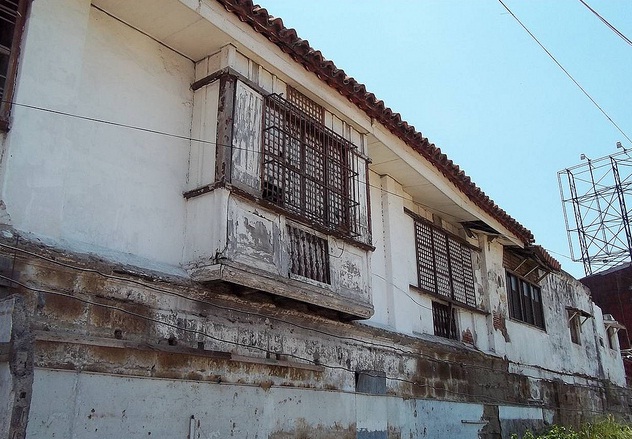
                                         - Alberto's House - Biñan, Laguna - the maternal ancestral house of Jose Rizal

Rizal’s mother Teodora Alonso came from the clan of Lakan Dula, known as the last Malay king of Tondo. She was also traced to Eugenio Ursua whose ancestors came from Japan. She was the second daughter of Lorenzo Alberto Alonso who was a former representative of Spanish Cortes and Brigida de Quintos whose parents were Manuel de Quintos, of a well-known family in Pangasinan and Regina Ursua who was the daughter of Benigna and Eugene Ursua.
As already noted, Teodora Alonso had a trace of Japanese ancestry. Moreover, she was of Ilocano-Tagalog-Chinese-Spanish descent. Combining the paternal and maternal ancestry, therefore Jose Rizal was born with Malay, Chinese, Japanese and Spanish lineages in his blood. Teodora Alonzo died on August 16, 1911 at the age of 84.